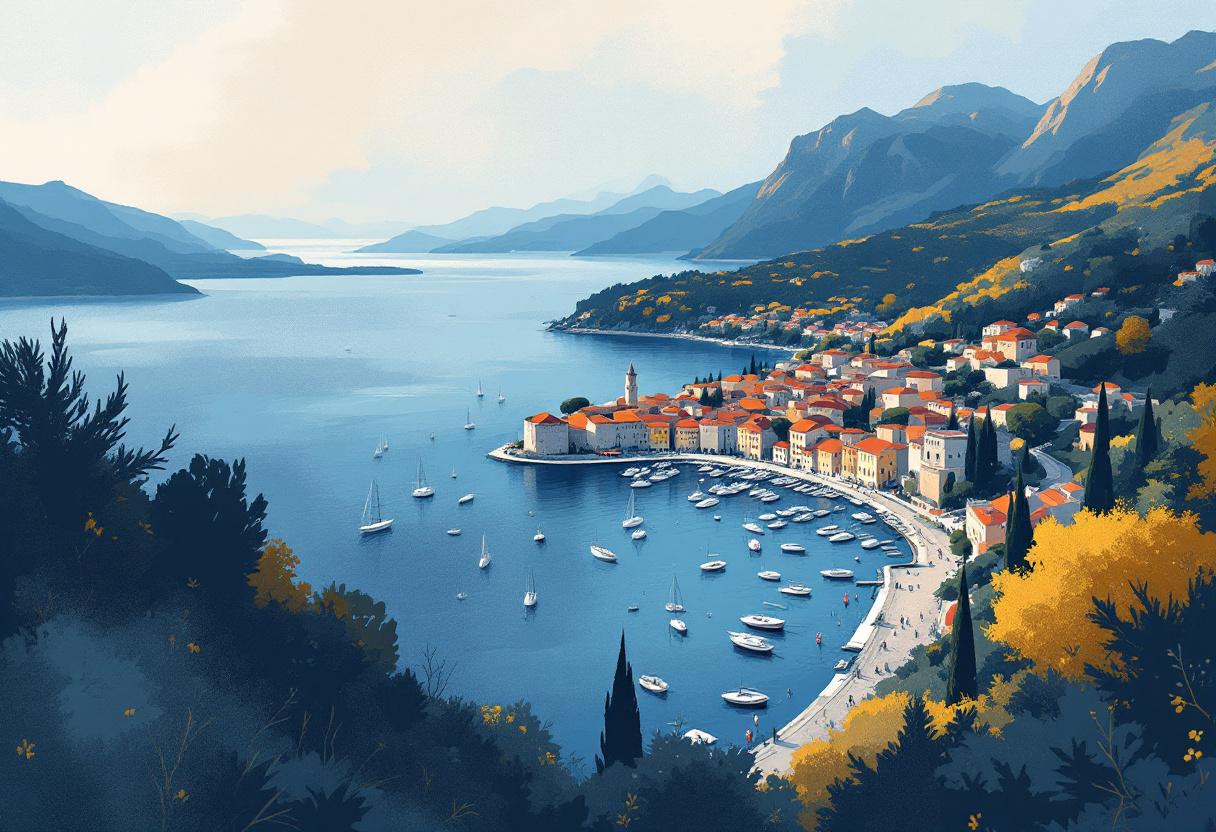
Croatia travel guide: Dubrovnik, Split and the islands without the Game of Thrones crowds
Part of the Greece travel guide: the honest first-timer's handbook (2025) guide
An honest Croatia travel guide covering Dubrovnik, Split, and the Dalmatian islands — with real crowd expectations, island logic, and what the budget looks like now.
In July, Dubrovnik's old town is approximately 90% tourists and 10% locals, and most of the locals are working in tourism. This is a fact worth stating at the start rather than burying in the third paragraph, because it changes how you plan. It doesn't mean don't go — Dubrovnik's old town is one of the most architecturally extraordinary places in Europe and worth seeing regardless of the crowds. It means going with accurate expectations rather than the peaceful medieval city of the brochure photography.
Croatia sits in an interesting comparison position with Greece. The Greek islands offer similar Adriatic summer logic — the ferry networks, the island-hopping culture, the dramatic coastline — but with different infrastructure, different island character, and a different budget reality. Croatia is slightly more expensive than Greece now. The question is whether the specific things Croatia offers are worth the premium, and for the right itinerary, they are.
Fly into Split, not Dubrovnik
This is the single most consequential logistical decision in a Croatia trip and most first-timers get it wrong.
Most people fly into Dubrovnik because it's the famous name. The correct answer for a one-week Dalmatian coast itinerary is to fly into Split and end in Dubrovnik, or vice versa — not to fly into and out of Dubrovnik, which forces backtracking and misses the best of the coast.
Split Airport (SPU) is 25km from the city, cheap to reach (shuttle bus €6, taxi €25–€30). Dubrovnik Airport (DBV) is 18km from the old town, and the transfer is expensive (shuttle bus €10, taxi €35–€45). Split is a bigger airport with more routes; Dubrovnik is served by more seasonal charter flights from the UK and Germany.
For booking flights — the cost comparison between flying into Split vs Dubrovnik is worth running specifically because it varies by origin.
The ideal routing: Split in, Dubrovnik out (or reverse), with islands in between. This covers the full length of the Dalmatian coast and avoids doubling back.
Dubrovnik: what you're actually dealing with
The city walls: walk them at opening (8am) or in the late afternoon after 5pm, when cruise ship day-trippers have largely returned to their ships. The full 2km circuit takes about an hour and a half; the views over the orange rooftops to the Adriatic are the reason everyone is there. Admission is €35 — expensive, non-negotiable, worth it.
The Stradun (the main marble-paved street) becomes a slow-moving crowd by 10am in peak season. Walk it in the evening when the lighting is better and the character shifts from tourist throughfare to something more like an actual street.
The Mount Srđ cable car (€19 return) gives you a view of the old town from above. Go at golden hour.
Staying near Dubrovnik: accommodation inside the old town is limited and very expensive (€200+ a night for anything decent). The Lapad neighbourhood to the northwest is 3km from the old town, has a beach, and cuts accommodation costs roughly in half. Cavtat, 17km south, is a quiet village with cheaper accommodation and a direct boat to Dubrovnik's old town (€15–€20, 45 minutes).
Split: underrated and worth two nights
Split has one genuine claim to architectural uniqueness: the entire old town is built inside a Roman palace — the retirement palace of Emperor Diocletian, constructed in 305 AD. People actually live inside a Roman imperial complex. The streets run between walls that are 1,700 years old. The cathedral is a converted mausoleum.
The Diocletian's Palace core is free to walk through and best explored in the morning before the heat peaks. The basement halls (€10 entry) give you a sense of the original palace's scale. The Peristyle (the former ceremonial square) is where you want to spend an hour with a coffee.
Split has a real population — around 170,000 people — that lives alongside the tourist infrastructure rather than being subsumed by it, which distinguishes it from Dubrovnik. The Varoš neighbourhood immediately west of the palace walls is residential and has the best local restaurants in the city.
The islands: who each suits
Hvar is the most famous and the most crowded. Hvar Town is genuinely beautiful — the harbour, the hilltop fortress, the Renaissance cathedral. It's also the centre of the Adriatic party scene. The eastern part of the island (Stari Grad, Vrboska) is quieter. If you want Hvar without the party element, base yourself in Stari Grad instead.
Korčula is the island most often recommended as the Hvar alternative for people who want quiet and character. The old town is a remarkably preserved 14th-century walled city on a small peninsula. Korčula Town in summer is busy but walkable. The rest of the island — vineyards, pine forests, centuries-old villages — is accessible by scooter or car hire.
Vis is the furthest island from the coast and historically the most restricted — it was a Yugoslav military base until 1989. As a result it's developed far more slowly, has a more intact fishing village culture, and still has local restaurants where the catch was in the water that morning. The Blue Cave at nearby Biševo (€15–€20 per person by boat from Komiža) is one of the more remarkable natural light phenomena in the Adriatic.
Brač is the closest large island to Split (50-minute ferry, €6) and home to the famous Zlatni Rat beach — the spit of white pebble that extends into the sea and shifts with the current. Going in the early morning or in May and September substantially improves the experience.
The ferry system
Ferries are operated primarily by Jadrolinija and several smaller operators. Book at jadrolinija.hr or via GetByFerry. Main connections from Split: Split to Hvar Town (1 hour, car ferry), Split to Stari Grad on Hvar (2 hours), Split to Vis (2h 15min), Split to Supetar on Brač (50 minutes).
Two islands is enough for 10 days — the principle from Greek island-hopping applies equally here. Three islands in a week is possible; you'll feel it.
What Croatia actually costs
Croatia is now mid-range European, not cheap Eastern European. Budget around €100–€130 per person per day for a comfortable trip.
The transition happened between 2019 and 2023 and was accelerated by Euro adoption in January 2023. Accommodation in the old towns of Dubrovnik and Split runs €100–€200+ a night for anything with character. Budget guesthouses exist from €60.
Food is where Croatia still offers genuine value at the mid-range. A seafood platter with house wine at a konoba (traditional restaurant) away from the waterfront tourist strip is €25–€35 per person. The rule as everywhere: one street back from the obvious place, menu on a chalkboard, local regulars at other tables.
Combining Croatia with Italy
The Adriatic is a short body of water. Croatia combines naturally with Puglia or the Adriatic coast of Italy on a longer trip — Split to Ancona by overnight ferry (8–10 hours, €40–€80 per person plus €80–€120 for a cabin) or Split to Bari directly. These are overnight crossings that save a hotel night and position you on the Italian Adriatic coast without a flight.
The honest truth about Croatia's island-hopping
The island-hopping dream runs directly into the same reality as Greece: a lot of ports, a lot of luggage movement, and less settled time on each island than the itinerary suggests.
Two islands in ten days. That's the number. It feels conservative until you've done one more and spent the third arriving, reorienting, and leaving before you've understood where you were.
If you want to go deeper on any part of this, Budge is essentially a travel researcher you can have a conversation with — it's what I built because I was tired of piecing together 12 tabs.
Pick two islands, stay three nights on each, and spend the remaining time on the mainland where the cities have actual populations and the food isn't priced for tourists who will be gone by Sunday.
Plan your trip
Plan your own trip with AI
Budge turns a conversation into a full travel plan — flights, hotels, budget, and everything in between.
Start planning for free →