Iceland in summer: midnight sun, road trips and what nobody tells you about the weather
Iceland in summer is extraordinary and exhausting in equal measure. Here's what the brochures skip — weather, driving reality, costs, and the midnight sun sleep problem.
At 2am in late June in Iceland, it is completely light outside. Not dusk — light. The kind of light that at home means it's mid-afternoon. Your body knows exactly what to do with that information, which is to stay awake. Most first-time visitors to Iceland in summer don't sleep properly for the first three nights, and the ones who prepared for this by buying blackout curtains or a sleep mask do better than the ones who didn't and assumed they'd be fine.
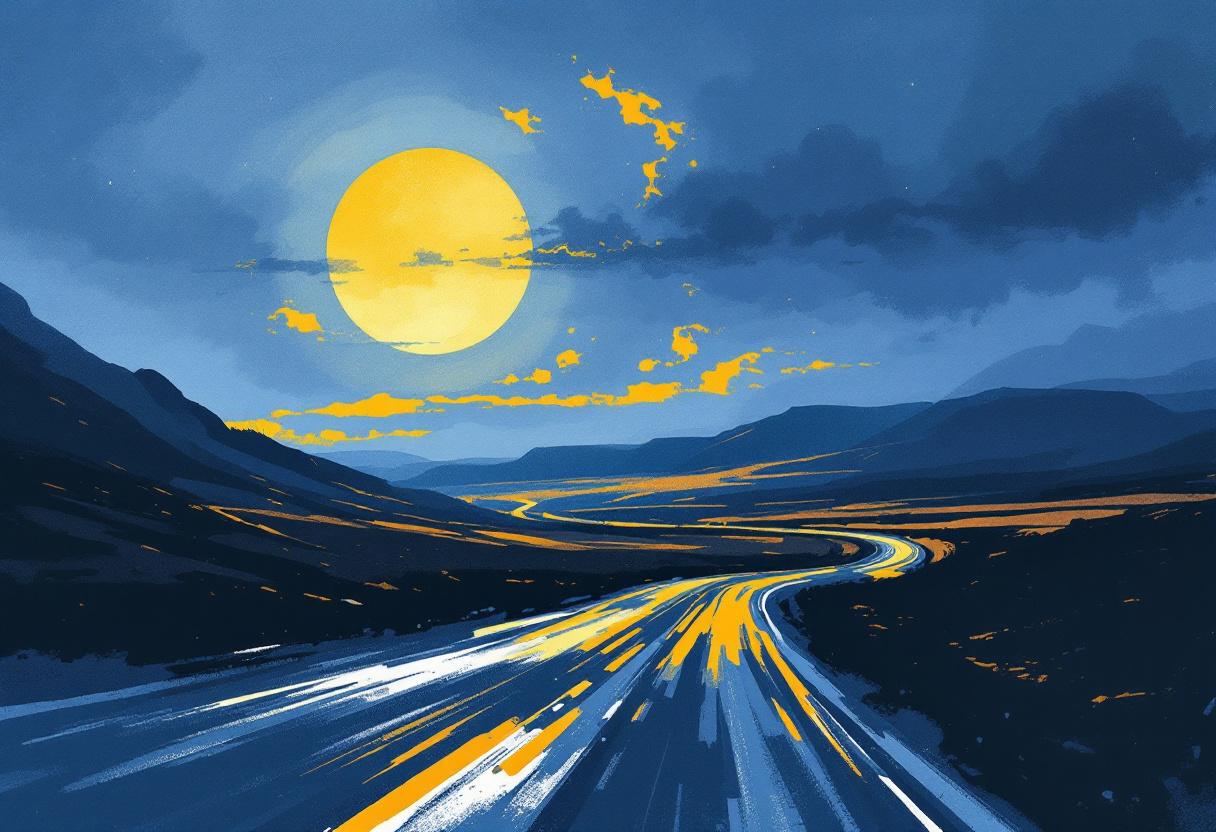
The midnight sun is the most disorienting aspect of an Icelandic summer and the one people are least prepared for — not because the information isn't available but because it's genuinely difficult to internalise until you're standing in it at midnight in your hotel room wondering why your brain won't shut off.
Once you calibrate to it — by about day four, for most people — it becomes one of the stranger pleasures of the trip. The ability to pull over on the Ring Road at 11pm to watch light on a glacier, to hike until 9pm without a headlamp, to photograph waterfalls in golden hour light that lasts for three hours: these are the things people remember about Icelandic summer. Getting there requires surviving the first few nights.
The Ring Road: can you actually do it in 7 days?
Yes. You will also be tired by the end of it.
The Ring Road (Route 1) circles Iceland at around 1,332km. In 7 days, that's about 190km per day — achievable, but the distances on a map don't account for the stops. You will stop frequently. For waterfalls, for landscapes, for the spontaneous pull-off that turns out to be a seal colony. A driving day with two or three significant stops that looked like 3 hours on the map takes 5–6 hours in reality.
The honest assessment: 7 days is enough to complete the Ring Road and see the main sights. It's not enough to feel unhurried at any of them. 10–12 days is the length that experienced Iceland visitors recommend. If you have a week and want to do the Ring Road, go for it — just calibrate to 4–5 hours of driving on most days.
The alternative for a 7-day trip: don't complete the Ring Road. Spend more time in fewer regions. The south coast alone — Seljalandsfoss and Skógafoss waterfalls, the Jökulsárlón glacier lagoon, Vatnajökull National Park — is a 3-day itinerary that doesn't require rushing.
Logistics for the self-drive: the planning framework for a self-drive trip covers the booking sequence — car before accommodation, always, because rental car availability in June and July gets tight. Book the rental car at least 8–10 weeks ahead. A 4WD or AWD is worth the upgrade.
The weather reality
It will rain. It may snow. It will certainly be windy. Pack for a Scottish November, not a Scandinavian summer.
Iceland's weather in June and July averages around 10–13°C on the south coast, with frequent rain, regular wind, and occasional snow at altitude. "Summer" in Iceland is a milder version of the rest of the year rather than a warm season in any continental sense.
The specific weather failure mode for visitors: arriving in light summer clothing because it's June and July. The wind chill on an exposed headland brings a 12°C day into genuine cold territory. The rain is horizontal in a way that defeats most standard waterproof jackets.
What to pack: a proper waterproof jacket, not a shower-resistant one. Waterproof trousers. Fleece or thermal base layer. Gloves. The exact kit for a Scottish summer walk. Layers over everything, because the weather changes direction quickly enough that you can start a hike in sunshine and finish it in rain and be back in sunshine by the time you reach the car.
The upside of variable weather: when Iceland is clear, it is extraordinary. The light quality on a clear summer day — the low sun angle even at noon producing golden hour light that lasts all day — is unlike anywhere else.
What Iceland actually costs
Budget €200+ per day for two people including a rental car. Iceland is consistently one of the most expensive countries in the world for travellers.
Accommodation: guesthouses and farmstays on the Ring Road range from €120–€200 a night. Reykjavik hotels start around €150 for mid-range. Camping is a genuine budget option (the Camping Card covers 28 nights at most established sites for €99 per person).
Food: eating out in Iceland is expensive without qualification. A main course at a mid-range Reykjavik restaurant is €25–€40. The supermarket (Bónus is the cheap chain) is the correct answer for most lunches on a road trip — buying lunch supplies in the morning and eating them at viewpoints cuts costs substantially.
Rental car: a small 4WD runs €80–€120 a day from a local operator. The local operators (SADcars, Geysir, Go Campers) are consistently cheaper than international chains and have been reliable. Full insurance cover is worth taking — volcanic gravel roads throw stones at undercarriages. The "gravel protection" and "sand and ash protection" add-ons are specific to Iceland and exist because volcanic sand is genuinely hazardous. Take them.
For booking flights to Iceland: book directly with Icelandair or Play (the budget carrier). Icelandair offers a stop-over option — a free layover in Reykjavik of 1–7 nights on transatlantic routes — which is one of the better airline deal structures available.
The Golden Circle: go or skip?
Go. It's crowded and it's worth it. Do it on day one or two, before you've developed strong opinions about what "too many tourists" means.
The Golden Circle is a 300km circuit accessible from Reykjavik covering three main sites: Þingvellir (the rift valley where the American and Eurasian tectonic plates are visibly separating), the Geysir geothermal area (where Strokkur erupts every 5–10 minutes), and Gullfoss waterfall. All three are legitimately impressive and all three are busy.
The tactic that works: do the circuit counterclockwise (Gullfoss first) and start at 8am. The geothermal area is the most crowd-concentrated point and is significantly more bearable before 10am.
The Blue Lagoon question: it's overpriced (€70–€100), heavily marketed, and genuinely good if you go early morning or evening rather than peak afternoon. It's not worth going to if you resent the marketing. It's worth going to if you treat it as a luxury rather than a natural wonder.
What's worth the money
Glacier tours: yes. Walking on a glacier with crampons and an ice axe in July is an experience that doesn't exist in most of the world and the guided 2–3 hour tours are well-run. The glacier is receding visibly year by year — within a decade the accessible sections may be substantially diminished. Book ahead in peak season.
Whale watching from Húsavík on the north coast has a significantly higher success rate than Reykjavik whale watching (around 98% vs 80%) because Húsavík sits at the edge of a productive feeding ground. If you're driving the Ring Road, the extra day to reach Húsavík is worth it.
Puffin tours: Atlantic puffins nest in Iceland in summer (roughly May to August). If you're driving the south coast, the cliffs at Dyrhólaey have free puffin viewing from the cliff path during nesting season — no tour required.
This is exactly the kind of research rabbit hole that Budge was built for — you can ask it follow-up questions about any of this and it remembers what you care about across the whole conversation.
The honest truth about Iceland in summer
Iceland in summer is not a beach holiday. It is not a relaxing trip. It rewards people who are comfortable with uncertainty, long drives, changing plans when the weather dictates, and pulling over constantly because the landscape demands it.
The people who enjoy it most consistently built flexibility into their itinerary rather than booking everything in advance and expecting to execute a schedule. A day in Iceland can start with fog and horizontal rain and turn into three hours of clear light over a volcanic caldera by afternoon. If you've committed to driving four hours to the next accommodation, you've missed the good weather at your current location. If you're flexible, you stay.
Book your accommodation on the Ring Road in advance because it's limited and fills up, but keep your daily agenda loose enough to respond to weather. The best Iceland experiences are almost all spontaneous: the road that looked ordinary on the map and turned out to overlook a lava field, the pull-off that had a waterfall nobody mentioned, the 11pm walk on a beach in full daylight with no one else there.
Iceland in summer is uncomfortable in specific ways that are entirely worth it. The sleep disruption settles. The cold is manageable. The rain passes. What doesn't pass is the feeling of being somewhere that still looks like the beginning of the world.
Plan your trip
Plan your own trip with AI
Budge turns a conversation into a full travel plan — flights, hotels, budget, and everything in between.
Start planning for free →