Japan in autumn: the trip that beats cherry blossom season (and everyone ignores)
Part of the The complete Japan travel guide for first-timers (2025) guide
Cherry blossom season gets all the attention and autumn gets perhaps half of it.
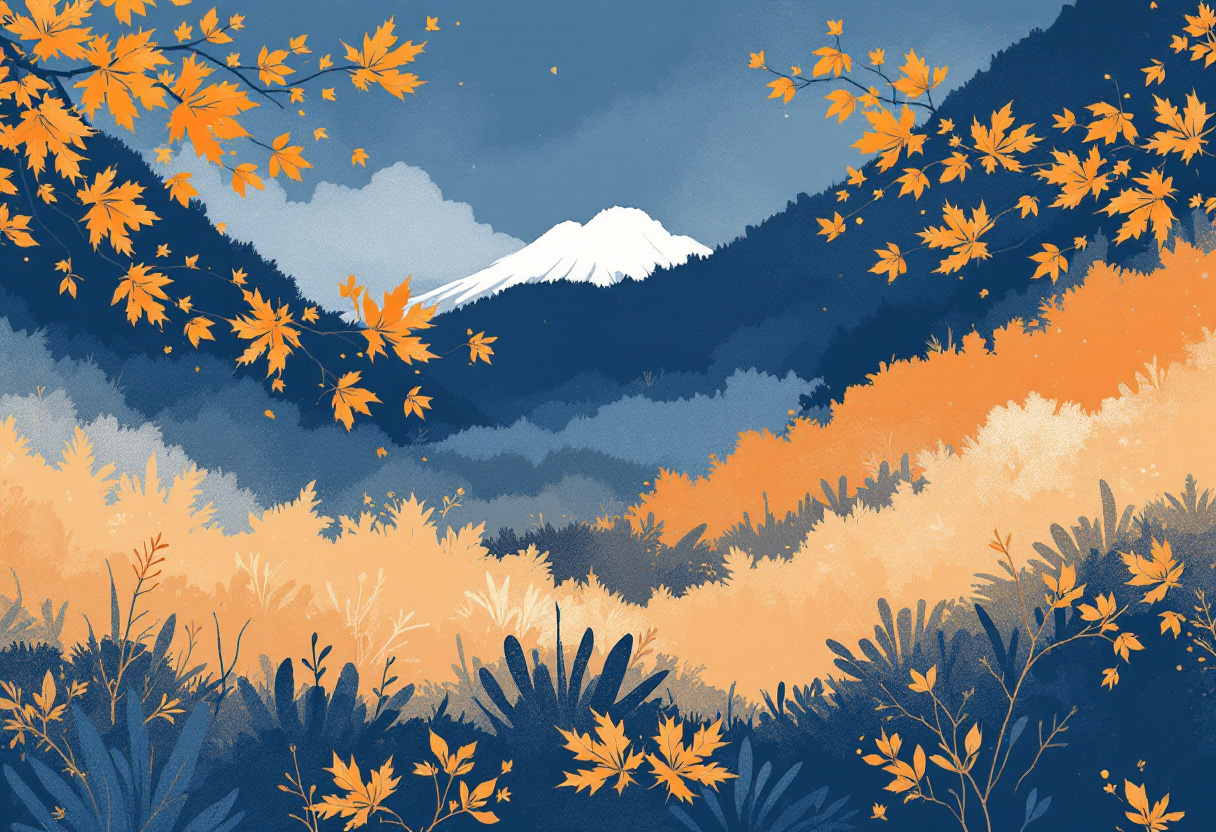
There's a specific hour in early November at Tofuku-ji temple in Kyoto — roughly 7 to 8am, before the crowds arrive — when the maple trees in the Tsutenkyo Bridge ravine are at their peak colour and the morning mist is still sitting in the valley below. The reds and oranges and yellows are dense enough that the colours seem to generate their own light. The bridge, which spans the ravine at tree-canopy height, is almost empty. By 9:30am it will be dense with visitors and their phones. At 7am it's one of the more extraordinary places you can stand in Japan.
Cherry blossom season gets all the attention and autumn gets perhaps half of it. This is partly because the cherry blossom narrative is more dramatic — the brief, perfect bloom, the transience, the national obsession — and partly because it arrived in the Western travel consciousness earlier. But the photographs are equally extraordinary, the experience is considerably less stressful, and the argument for autumn as the better first Japan trip is stronger than most guides acknowledge.
The full Japan planning context covers the overall picture. The month-by-month breakdown explains where autumn sits relative to every other season. This post makes the specific case for late October and November.
The case for autumn over spring
Four specific arguments, not just "it's pretty."
The crowd difference is real and significant. Cherry blossom season in Kyoto in late March and early April is one of the most visited periods of the year — accommodation books out six months in advance, the Philosopher's Path is a human traffic jam, the major viewpoints require strategic timing. Autumn foliage season is busy but meaningfully less so. The same Tofuku-ji temple that has 2,000 visitors by 10am in peak autumn has perhaps 800. The 7am trick still works; the window before the crowds is longer.
The booking situation is more forgiving. Kyoto accommodation in mid-November can typically be booked 2–3 months ahead without significant difficulty. The same accommodation in late March requires 5–6 months minimum. For travellers planning on a normal timeline, autumn is simply more accessible.
The weather is better for walking. Japan's autumn is 15–20°C in October and November — cool, dry, comfortable for the full-day walking that Japan requires. Cherry blossom season runs 15–20°C in Tokyo and Kyoto but with higher variability — March can be cold and rainy, April can be warm and then suddenly cold. Autumn is the more reliable season for the kind of weather that makes eight hours of temple and garden walking pleasant rather than exhausting.
The colour window is longer. Cherry blossom peak is 5–7 days in any given location and cannot be reliably planned around more than four weeks in advance. Autumn colour runs 2–3 weeks at peak in most locations and varies less dramatically year to year. Planning is more reliable; a flexible trip is less necessary.
When autumn colour peaks — by region
The colour moves south, from Hokkaido in early October to Kyushu in late November.
Hokkaido: early to mid-October. The national parks — Daisetsuzan, Shiretoko — peak first and are the most dramatic large-scale colour in Japan. Remote, spectacular, and cold by October (5–12°C).
Tohoku (northeastern Honshu): mid to late October. Naruko Gorge near Sendai and Towada-Hachimantai National Park are the highlights. Less visited than Kyoto equivalents; some of the best colour in Japan.
Nikko: late October. The cedar forest and temple complex surrounded by maple colour in late October is one of the best day trips from Tokyo at any time of year and extraordinary in autumn. A reliable mid-range peak date.
Tokyo: late October to mid-November. Koishikawa Korakuen (a 300-year-old garden), Shinjuku Gyoen (the national garden with excellent maple and ginkgo concentration), and Hamarikyu Gardens are the main viewing spots.
Kyoto: mid to late November. This is the peak of peak — the Arashiyama bamboo grove backdrop shifts colour, the temple gardens reach maximum intensity, Tofuku-ji and Eikan-do are the most visited and the most spectacular. Peak window typically runs November 15–25, though it varies by 7–10 days between years.
Osaka and Nara: late November. Slightly later than Kyoto, which means an itinerary that moves south through the Kansai region can follow the peak naturally.
The specific autumn highlights
Nikko in early November, Kyoto's temples in mid-November, Arashiyama at dawn, Osaka Castle Park.
Nikko (two hours from Tokyo by Tobu Nikko Line, around ¥1,390 each way) in late October and early November combines the ornate shrine complex — the contrast of the Tosho-gu's elaborate colour against the maple forest backdrop is one of the more photographically satisfying juxtapositions in Japan — with autumn colour at a peak that typically arrives before Kyoto's. The kilometre-long cedar avenue approach to the complex, flanked by maples turning yellow and orange, is worth the trip regardless of the shrine visit.
Kyoto's three essential autumn temples: Tofuku-ji for the Tsutenkyo ravine view (go at 7am; admission ¥600; the ravine view is the reason), Eikan-do (famous for its evening illuminations in mid-November — the temple stays open until 9pm for the specific purpose of night viewing, admission ¥600), and Daitoku-ji complex (less visited than both, better for a slow morning walk through 24 sub-temples with remarkable dry gardens).
Arashiyama at dawn in November. The bamboo grove itself doesn't change colour, but the surrounding mountain slopes turn in late November and the bamboo-with-autumn-mountain backdrop at 6:30am is the photograph almost nobody has. The Tenryu-ji garden adjacent has maple trees that reflect in the pond on still mornings — the classic composition, genuinely achievable at opening time (8:30am) in November before the tour group wave.
Osaka Castle Park. This gets less coverage than the Kyoto temples but is one of the best urban autumn viewing spots in Japan. Around 600 cherry trees in the park turn yellow and orange in November (the same trees that bloom pink in spring), and the castle keep at the centre of the colour is a composition that works in every direction. Free to walk; castle interior admission ¥600.
Shinjuku Gyoen in Tokyo. A 58-hectare national garden with a specific concentration of maple, ginkgo, and cherry trees that produce multi-coloured autumn across different species through October and November. Admission ¥500. The French formal garden section has ginkgo trees that turn uniformly gold in mid-November and drop carpets of yellow leaves — a different visual register from the maple reds.
Combining spring and autumn — the returning visitor structure
For travellers who want both, Japan rewards return visits more than most destinations. The structure that works: first trip in autumn (Tokyo, Nikko, Kyoto, Osaka), second trip in spring (same core cities plus Hiroshima, Miyajima, and the slower pace of someone who already knows the metro system). The second trip benefits from the confidence of knowing how Japan works — you spend less energy on orientation and more on the experience itself.
The Kyoto 4-day itinerary covers the best Kyoto temples and the early-morning timing tactics that apply in both seasons. The specific autumn consideration is that the early-morning imperative is slightly less critical than in cherry blossom season — the window before crowds is longer — but still real. Tofuku-ji at 7am is still better than Tofuku-ji at 10am in November, just not by the same margin as Fushimi Inari at 5:30am versus 10am in late March.
The counterargument — addressed honestly
Cherry blossom is a genuinely unique phenomenon. The sakura is not just pretty — it carries a specific cultural weight in Japan, the hanami (flower-viewing) picnic culture, the national engagement with impermanence, the specific quality of pink blossom against blue spring sky that autumn cannot replicate. If cherry blossom is on your bucket list as an experience you specifically want, go for it. Just book six months ahead for Kyoto accommodation, build date flexibility into your trip, and accept that the viewing spots will be crowded.
The argument for autumn is not that cherry blossom is overrated. It's that autumn delivers a comparable visual experience with less planning friction, more comfortable temperatures, and more reliable timing — and for travellers who don't have a specific attachment to the sakura experience, it's the better starting point.
This is exactly the kind of research rabbit hole that Budge was built for — you can ask it follow-up questions about any of this and it remembers what you care about across the whole conversation.
The honest truth about Japan in autumn
Japan in autumn is one of the best travel experiences in the world and remains significantly underrated relative to spring.
The photographs are equally extraordinary — the colour range of autumn (red, orange, yellow, brown, the occasional late green) is actually wider than cherry blossom's (pink and white and green). The experience is considerably less stressful in terms of booking logistics, crowd management, and weather variability. And the specific feeling of Japan in November — the cool, clear days, the smell of fallen leaves in temple gardens, the earlier darkness that makes evening illuminations possible in a way they aren't in spring — is its own season rather than a lesser version of spring.
Go in October or November for your first trip. Thank yourself in Tokyo at 7am in Shinjuku Gyoen with yellow ginkgo leaves at your feet and nobody else around, which is the version of Japan that most spring visitors have never seen.
One practical note on autumn that differs from spring: the ryokan and accommodation booking window is genuinely more forgiving. Kyoto accommodation in mid-November can typically be confirmed 8–10 weeks ahead at good availability. Compare this to cherry blossom season, where the same accommodation requires six months. For the traveller planning a Japan trip on a normal timeline rather than a year in advance, autumn is simply the more accessible option. The trip you can actually plan and book is better than the perfect trip you defer until you can organise it correctly.
The autumn light has one specific quality that deserves mention: Japan at latitude 35 degrees north in November has a low sun angle that lasts all day — the equivalent of golden hour light runs from roughly 3pm to 5pm — and this light on maple colour produces the specific quality of autumn photographs that look almost artificially saturated. They're not. The colour is that intense. Go see it.
Plan your trip
Plan your own trip with AI
Budge turns a conversation into a full travel plan — flights, hotels, budget, and everything in between.
Start planning for free →